
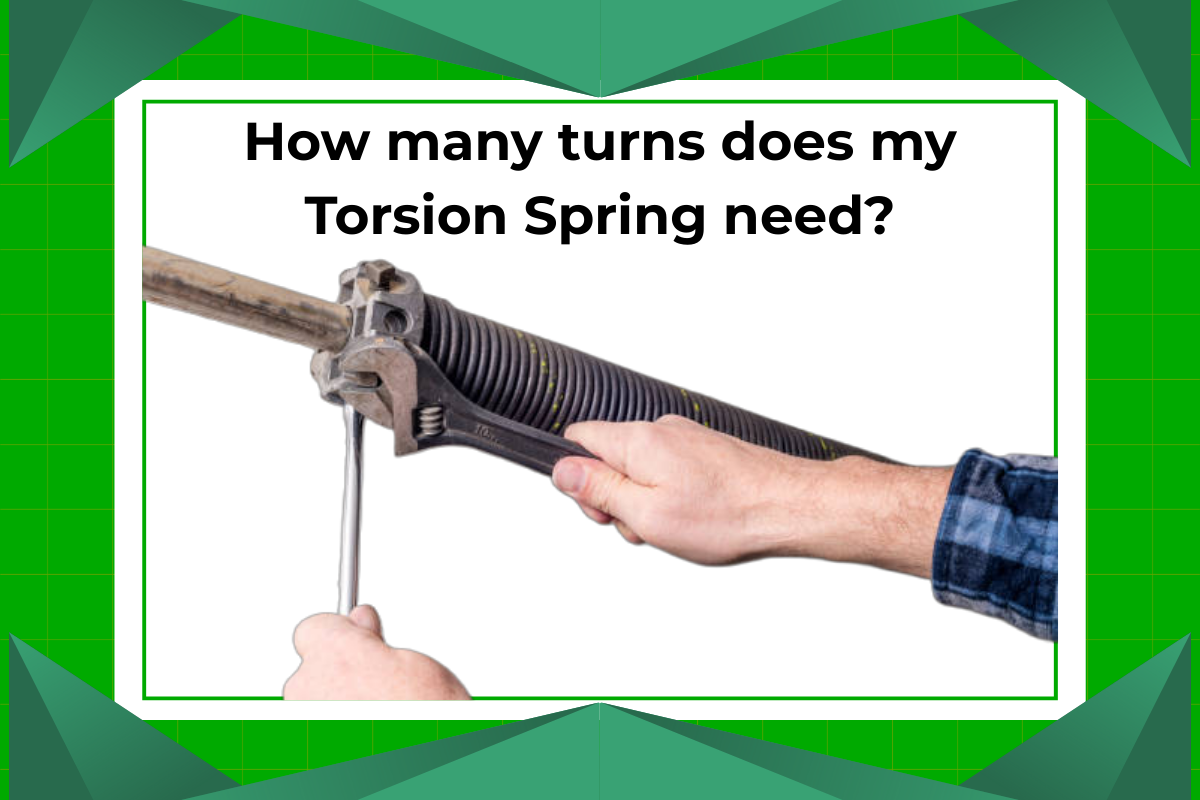
Introduction: Understanding Torsion Spring Turns
When it comes to garage doors, torsion springs play a vital role in balancing the door’s weight and making it easy to open and close. One key factor in ensuring your torsion spring works effectively is the number of winds or turns applied to the spring. But how do you know how many turns are needed for your specific garage door?
In this guide, we’ll walk you through how the number of turns is calculated based on your door’s height, why it's crucial that the right number of turns is used, and what could happen if your torsion spring isn’t correctly rated for your door.
How Many Turns Does a Torsion Spring Need?
The number of winds or turns that a torsion spring need depends on several factors, with the door height being one of the most important. The correct number of turns ensures the spring is properly tensioned to balance the door and allow smooth operation.
Here’s how you can calculate the number of turns for your torsion spring based on your door height:
General Formula for Turns
A common guideline for calculating the number of turns is based on the door height and spring specifications. For typical residential garage doors, the general rule of thumb is:
-
1 full turn for every 1 foot of door height + additional .5 turn
or
- 4 quarter turns for every 1 foot of door height + additional 3 quarter turns.
So, if you have a 7-foot (84 inches) door, the spring will typically need ~7.5 full turns or ~31 quarter turns (Plus or minus a few quarter turns to find the right balance).
| Garage Door Height | Quarter Turns | Full Turns |
|---|---|---|
| 6 ft door | 28 quarter turns | 7 turns |
| 6 ft 6 in door | 29–30 quarter turns | 7.25–7.5 turns |
| 7 ft door (most common) | 30 quarter turns | 7.5 turns |
| 7 ft 6 in door | 31–32 quarter turns | 7.75–8 turns |
| 8 ft door | 34 quarter turns | 8.5 turns |
Factors Affecting the Number of Turns
While door height is the main factor in determining the number of turns, other considerations also affect the spring’s tension, including:
-
Spring Rating: The torsion spring should be rated correctly for the weight and size of the door. If the spring is too weak or too strong, it will affect how many turns are needed.
-
Spring Size & Type: The wire gauge, inside diameter, and length of the spring all impact the spring's performance. Thicker wire gauges, larger diameters, or longer springs may require more turns to achieve the correct tension.
-
Track Type: The style of the garage door track (standard, low-headroom, or high-lift) can also influence the number of turns needed.
What Happens If Your Spring Has Too Many or Too Few Turns?
It’s crucial that the torsion spring is properly rated and adjusted for your specific door. If there are too many or too few turns applied, it could be a sign that the spring isn’t correctly matched to your garage door, and this can cause a variety of problems:
1. Too Few Turns:
If the spring doesn’t have enough turns, it means it’s not generating enough tension to support the weight of the door. This can result in:
-
Difficulty opening or closing the door.
-
Strain on the opener motor due to lack of support.
-
Premature wear on the spring, leading to early failure.
-
Common signs and Issues:
-
Door may open fine up to a certain point, then it become difficult to open in the later half.
- Door May not open at all.
-
Door may open fine up to a certain point, then it become difficult to open in the later half.
2. Too Many Turns:
If there are too many turns on the spring, it could cause the spring to become over-tensioned, leading to:
-
Excessive wear on the spring and other door components.
-
Unbalanced operation, making the door harder to open or close smoothly.
-
Damage to the door panels, tracks, or opener due to the excess force.
-
Common Signs and Issues:
- Door may begin to lift up on its own as you wind.
- Door may open abruptly or rise up too fast.
- Door may be difficult to shut or "Pull down" to close.
In either case, if your torsion spring needs significantly more or fewer turns than the typical calculation for your door height, it’s a good indication that your springs are not properly rated for your door. Incorrectly rated springs can cause poor performance, premature wear, and could be unsafe.
Correctly Rating Your Springs for Your Door
To ensure that your torsion spring is properly rated and adjusted for your door, here are some factors to consider:
-
Spring Weight Rating: The spring should be rated to lift the exact weight of your door. Garage doors vary in weight based on material (steel, wood, fiberglass), size, and insulation.
-
Correct Wire Size: The wire gauge used in the spring must be appropriate for the door’s weight and size. A spring that’s too thin won’t support the weight, and one that’s too thick may not unwind properly.
-
Spring Length and Diameter: The spring’s length and inside diameter must be tailored to the door’s size. Longer doors (8 feet or more) may need longer springs, while heavier doors may require a larger diameter for extra tension.
What to Do If Your Torsion Spring Needs Adjusting
If you notice that your garage door is difficult to open or close, or if the spring has an unusual number of turns, it's time to inspect the spring. Here's what you can do:
-
Consult a Professional: Torsion springs are under high tension and can be dangerous to adjust yourself. It’s always recommended to consult with a professional garage door technician to adjust or replace your torsion springs correctly.
-
Check Spring Rating: If your springs are misrated, they should be replaced with properly sized and rated springs to ensure the door works efficiently and safely.
Conclusion: The Importance of Proper Spring Turns
The number of turns required for your torsion spring is directly related to your door height, but it also depends on the spring’s size, weight rating, and other factors. Always ensure that your springs are correctly rated for your garage door. If your spring requires significantly more or fewer turns than expected, it’s a sign that the spring may not be properly rated or sized for your door.
For the best performance, correctly rated springs and proper tensioning are crucial. If you're unsure whether your springs are correctly sized or need adjustment, don’t hesitate to contact a professional garage door technician for a thorough inspection.
Ready to ensure your torsion spring is properly rated and set for your door? Contact us today for expert help with garage door spring installations and adjustments!