
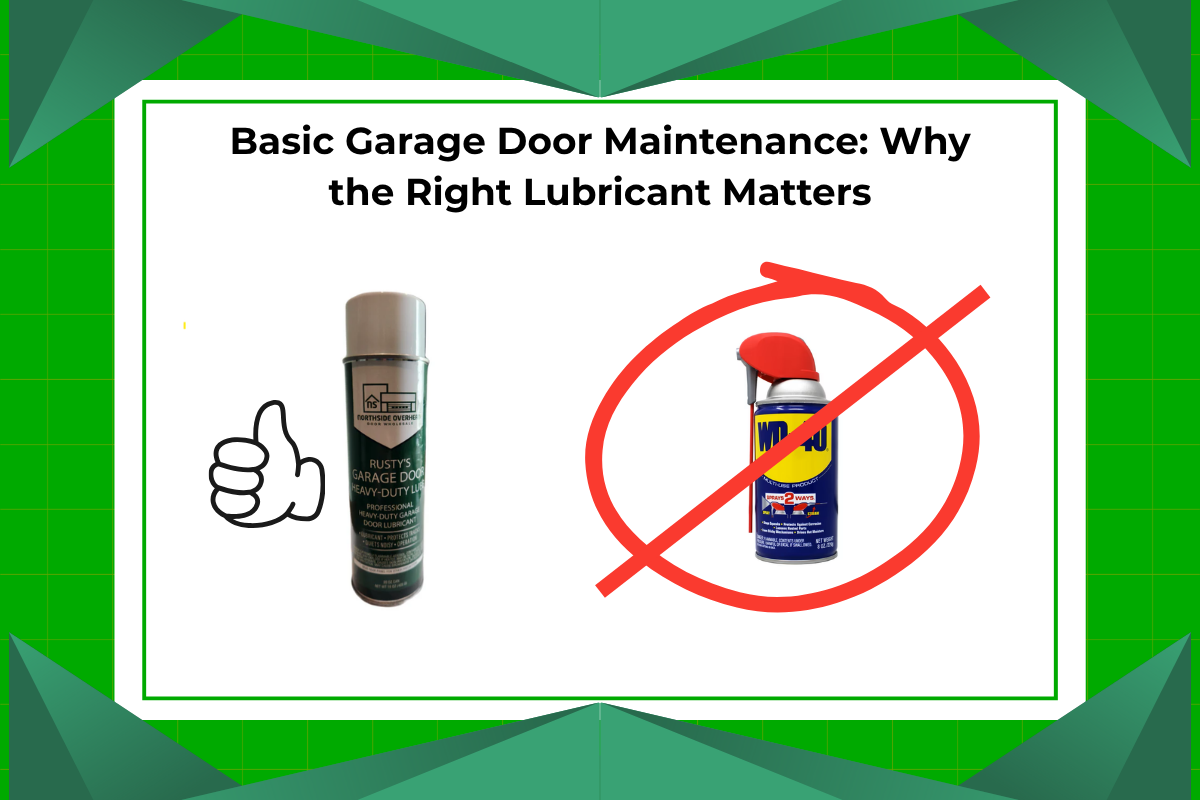
Is WD-40 Good for Garage Doors?
Many people reach for the familiar blue and yellow can of WD-40 Multi-Use Product when their garage door starts squeaking. While it can temporarily quiet a noisy hinge or roller, it's not designed as a long-term garage door lubricant.
The original WD-40 formula was created primarily as a water displacer, cleaner, and rust penetrant, not as a heavy-duty lubricant for garage door components.
It may:
- Remove dirt and grime
- Loosen rusty hardware
- Displace moisture
However, it does not provide the lasting lubrication that springs, rollers, bearings, and hinges require.
Where You Should NOT Use Standard WD-40
Avoid relying on standard WD-40 as the primary lubricant for:
- Garage door torsion springs
- Extension springs
- Hinges
- Steel rollers
- Bearings
- Pulleys
- End bearing plates
- Center bearings
These components experience significant friction every time your garage door opens and closes. They benefit from a lubricant that stays in place and continues protecting against wear.
When WD-40 Can Be Helpful
Standard WD-40 still has a place in garage door maintenance.
It works well for:
- Cleaning dirty metal surfaces
- Removing sticky residue
- Loosening rusted fasteners
- Displacing moisture after exposure to rain or humidity
If you use it for cleaning, follow it with a proper garage door lubricant.
Why a Dedicated Garage Door Lubricant Works Better
Garage door lubricants are specifically formulated for moving door hardware.
A quality lubricant should:
- Stay on metal surfaces instead of quickly evaporating
- Reduce friction between moving parts
- Help prevent rust and corrosion
- Reduce squeaks and vibration
- Resist attracting excessive dirt
- Protect components through thousands of door cycles
This results in quieter operation and less wear on expensive components.
Components You Should Lubricate
Twice a year, apply lubricant to:
Torsion Springs
Lightly coat the spring while the door is closed. This helps reduce friction between the coils.
Extension Springs
Apply a light coating along the length of the spring while avoiding excessive buildup.
Hinges
Lubricate each pivot point where the hinge moves.
Steel Rollers
Apply lubricant to the bearings—not the wheel itself.
If you have nylon rollers with sealed bearings, only lubricate the bearings if they are not permanently sealed.
Bearings
Apply a small amount where the shaft rotates inside the bearing.
Pulleys
Lubricate pulley bearings on extension spring systems.
Lock Mechanism
A small amount of lubricant helps keep manual locks operating smoothly.
Parts You Should NOT Lubricate
Avoid lubricating:
- Garage door tracks
- Belt drives
- Nylon roller wheels
- Photo-eye sensors
- Garage door opener rails (unless the manufacturer specifically recommends it)
Adding lubricant to the tracks often attracts dirt and debris, which can make the door operate less smoothly.
How Often Should You Lubricate Your Garage Door?
Most homeowners should lubricate their garage door:
- Every 6 months
- Before winter
- After cleaning the door
- Whenever components begin sounding dry or squeaky
Homes in coastal or humid environments may benefit from more frequent maintenance.
Why We Recommend Our Garage Door Lubricant
Not all lubricants are created for garage doors.
Our garage door lubricant is designed specifically for moving garage door components and provides longer-lasting protection than general-purpose products.
Benefits include:
- Long-lasting lubrication
- Helps reduce noise
- Protects against rust and corrosion
- Safe for springs, rollers, hinges, and bearings
- Easy precision application
- Leaves a protective coating that stays where it's belongs
Whether you're maintaining a new garage door or extending the life of an older one, using the right lubricant helps keep everything operating smoothly.
Shop Garage Door Lubricant
Routine maintenance only takes a few minutes, but it can help your garage door operate more quietly and reduce unnecessary wear on critical moving parts.
If you're already replacing springs, rollers, cables, or hinges, it's the perfect time to lubricate the entire system with a product designed specifically for garage doors.
Shop our Garage Door Lubricant today and keep your garage door running smoothly for years to come.

Garage Door Lubricant
Keep your garage door running quietly with a lubricant designed for torsion springs, rollers, hinges, bearings, and other moving hardware.
- ✓ Reduces squeaks & noise
- ✓ Long-lasting protection
- ✓ Won't gum up moving parts
- ✓ Helps prevent rust & corrosion


